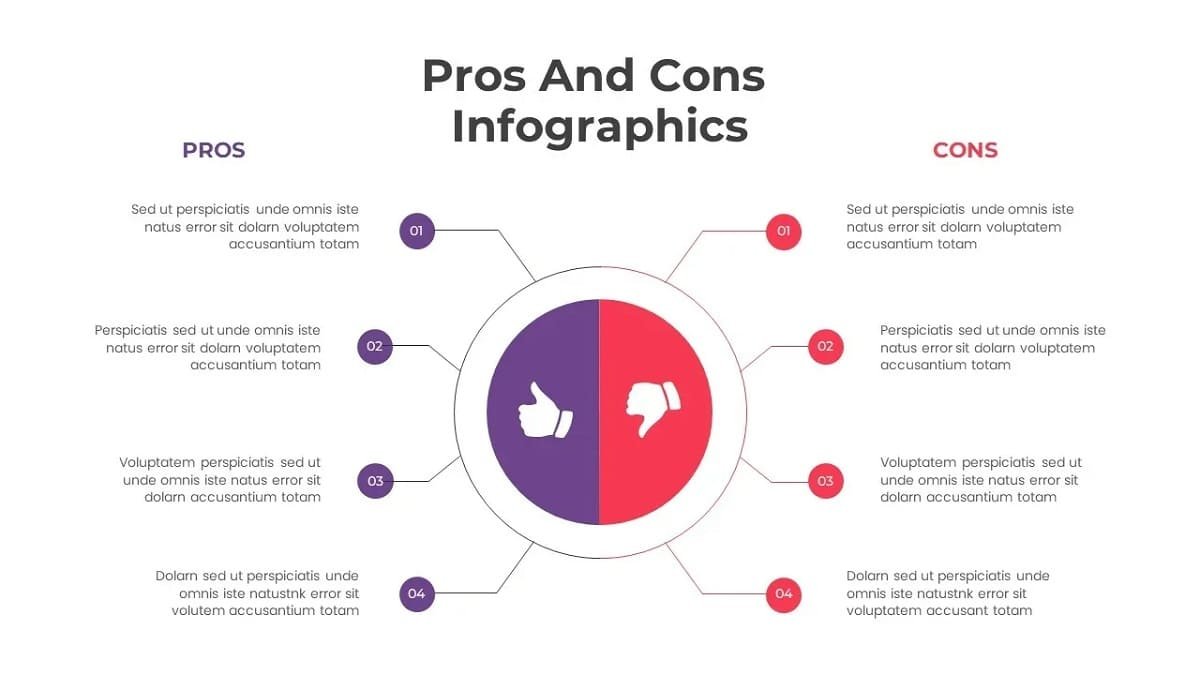
When you're faced with a fork in the road, whether it's a major career shift or simply deciding what to have for dinner, the sheer volume of considerations can feel overwhelming. This is where the trusty "Pros, Cons & Potential Drawbacks" list steps in, offering a simple yet powerful framework to untangle complex choices. It's more than just jotting down good and bad points; it's a structured approach to thinking, designed to bring clarity, reduce impulsivity, and help you make decisions you can stand by.
At a Glance: Key Takeaways for Mastering Decision Lists
- Clarity is King: Pros and cons lists cut through mental clutter, helping you visualize options and their outcomes.
- Banish Impulse: This tool forces a structured evaluation, slowing down snap judgments.
- Spot the Hidden: It often uncovers factors you might have otherwise overlooked.
- Simple to Start: All you need is a pen and paper (or a digital equivalent) – no fancy software required.
- Weigh Your Options: Assigning values to each point helps quantify the impact, making comparisons clearer.
- Beware Bias: While powerful, these lists are susceptible to personal biases; stay vigilant for skewed perceptions.
- Listen to Your Gut: The list is a guide, not a dictator. Your intuition still plays a vital role.
What Exactly Are We Talking About? Defining the Pros and Cons List
At its heart, a pros and cons list is a straightforward decision-making tool. Imagine drawing a line down the middle of a page, labeling one side "Pros" and the other "Cons." On the left, you'd list all the positive aspects, advantages, or benefits of a particular choice. On the right, you'd enumerate all the drawbacks, disadvantages, or negative consequences.
This seemingly basic exercise serves a profound purpose: it organizes your thoughts, brings abstract ideas into tangible view, and encourages a systematic evaluation of potential outcomes. It's a method that works just as well for an individual wrestling with a personal dilemma as it does for a team striving for consensus on a strategic move. The elegance lies in its simplicity, making informed decisions accessible to everyone.
Pros vs. Cons: A Quick Distinction
While often used together, it's helpful to be precise about what each column represents:
- Pros: These are the upsides. Think of them as the compelling reasons for doing something. They represent the benefits, advantages, positive outcomes, and opportunities that might arise from your choice.
- Cons: These are the downsides. They represent the reasons against doing something. This column holds the drawbacks, disadvantages, negative consequences, risks, and limitations inherent in your decision.
The Unmistakable Benefits: Why You Should Embrace This Tool
Don't let the simplicity of a pros and cons list fool you; its benefits are profound and far-reaching, transforming a muddled thought process into a clear, actionable path.
Crystal-Clear Clarity and Laser Focus
One of the most immediate advantages of a decision list is its ability to provide unparalleled clarity. By externalizing your thoughts, you create a visual map of your dilemma. This structured approach encourages a systematic evaluation, helping you see the bigger picture without getting lost in emotional fog or scattered considerations. It's like turning on a spotlight in a dimly lit room, illuminating every corner of your decision.
A Strong Defense Against Impulsive Choices
How many times have you made a snap decision only to regret it later? We've all been there. Pros and cons lists act as a crucial speed bump, forcing you to slow down and consider the full spectrum of potential outcomes. By requiring a structured approach, they help prevent those impulsive, gut-driven reactions that might not serve your long-term best interests.
Illuminating Overlooked Factors
It's easy to miss crucial details when your thoughts are bouncing around inside your head. The deliberate act of listing pros and cons often unearths previously unnoticed considerations. As you write, one point can trigger another, revealing hidden advantages or unexpected pitfalls you might have otherwise glossed over. This thoroughness adds a layer of rigor to your decision-making, significantly reducing the chances of missing something important.
Unbeatable Simplicity and Accessibility
Perhaps the most beloved aspect of this tool is its universal accessibility. You don't need expensive software, specialized training, or even a college degree to create one. A piece of paper, a napkin, or a basic note-taking app on your phone will suffice. This ease of creation means you can deploy it anytime, anywhere, making it a truly democratic decision-making method.
Fostering Objectivity in Emotional Moments
Decisions, especially personal ones, are often steeped in emotion. Whether it's excitement over a new opportunity or fear of change, strong feelings can cloud judgment. A pros and cons list encourages a self-distanced perspective, helping you step back and evaluate factors more objectively. By externalizing and categorizing points, you can somewhat detach from the emotional charge, fostering a more rational assessment. This doesn't mean ignoring your feelings entirely, but rather giving reason a fair chance at the table.
Navigating the Pitfalls: Limitations and Potential Drawbacks
While invaluable, a pros and cons list isn't a silver bullet. Like any tool, it has its limitations, and understanding them is key to using it effectively.
The Trap of Oversimplification
Complex issues rarely fit neatly into two columns. Reducing multi-faceted problems to a binary list of "good" and "bad" can sometimes oversimplify the situation. Nuance, interconnectedness, and conditional outcomes might be lost, potentially leading to a decision that doesn't fully address the underlying complexity. For truly intricate scenarios, this method might serve as a starting point, requiring further, more sophisticated analysis.
The Sneaky Influence of Bias
Humans are inherently prone to cognitive biases, and a pros and cons list is no exception. Our personal preferences, experiences, and existing beliefs can subtly skew how we perceive and weigh factors. This is known as the framing effect, where the way information is presented (or how you personally frame it) impacts your judgment. The overconfidence effect might also lead you to assign more weight to points that align with your desired outcome. What one person considers a "pro," another might deem a "con," highlighting the subjective nature of desirability perception.
Stifling Creativity and Intuition
Decision-making isn't always a purely logical exercise. Sometimes, the most innovative solutions or the "right" choice emerges from creative thinking, instinct, or a gut feeling. Sole reliance on a rigid pros and cons list might inadvertently suppress these vital components. If you strictly adhere to the tally, you could miss out on breakthrough ideas or overlook a deep-seated intuition that's trying to guide you, especially in scenarios where innovation or interpersonal dynamics are critical.
An Overemphasis on Raw Data
While analytical rigor is a benefit, an exclusive reliance on quantifiable data or easily listed points might not always be the most effective path. Some decisions benefit from a holistic, intuitive understanding that goes beyond what can be easily bulleted. Sometimes, a "feeling" about a situation, built on years of experience or subconscious pattern recognition, can be more accurate than a purely analytical tally. It's crucial to remember that the list is a tool to inform your decision, not to make it for you.
Crafting Your Own Decision List: A Step-by-Step Guide
Ready to put this powerful tool to work? Follow these steps to create a comprehensive and insightful pros and cons list.
1. Define Your Decision with Crystal Clarity
Before you list anything, know exactly what you're trying to decide. A vague question leads to vague answers.
- Example: Instead of "Should I move?", ask, "Should I move to Austin, Texas, next year for a new job opportunity with Company X?" This specificity is crucial for focusing your thoughts.
2. Set Up Your Two-Column Chart
Grab a piece of paper, open a digital document, or draw on a whiteboard. Create a clear "T" shape or a two-column table.
- Label the left column "Pros" and the right column "Cons."
- Title the chart with your clearly defined decision, e.g., "Decision: Moving to Austin, TX for Company X."
3. Brainstorm and List All Your Pros
Now, let your ideas flow. In the "Pros" column, write down every possible positive consequence, benefit, advantage, and opportunity related to your decision. Don't self-censor at this stage; just list.
- For example, if moving to Austin: "Higher salary," "Better career growth," "Warmer weather," "New experiences," "Closer to friends in Texas."
4. Brainstorm and List All Your Cons
Switch to the "Cons" column. List every potential negative outcome, drawback, limitation, risk, or disadvantage. Again, don't hold back.
- For example, if moving to Austin: "Leave current friends/family," "Higher cost of living," "Longer commute," "Don't know anyone in Austin yet," "Stress of moving."
5. Broaden Your Perspective: Add Third-Party Pros and Cons
Great decisions consider impact beyond just yourself. Think about how your choice will affect others: your spouse, children, family, team members, other departments, or even your community. Consider asking a trusted friend, mentor, or someone directly affected by your decision to review your list and add any points you might have missed. This external perspective can reveal critical factors.
6. Assign Weights and Values
This is where your list gains analytical power. Go through each item on both sides and assign a numerical value reflecting its relative importance or impact.
- Use a scale, for instance, from +1 to +5 for pros (with +5 being a highly significant positive) and -1 to -5 for cons (with -5 being a highly unfavorable negative).
- Be honest: A minor perk might only be a +1, while a major career boost could be a +5. Similarly, a small inconvenience might be a -1, but a significant financial strain could be a -5. This helps mitigate the oversimplification trap by giving different factors different weight.
7. Calculate Your Scores and See the Numbers
Sum up the values in each column separately.
- Total Positive Score: Add all the numerical values from your "Pros" column.
- Total Negative Score: Add all the numerical values from your "Cons" column.
Now, compare them: - If the total positive score is significantly higher than the total negative score, your decision might be beneficial.
- If the total negative score is higher, you might want to reconsider or explore alternative options.
- If the scores are very close, it suggests a balanced decision, possibly requiring further research, deeper reflection, or seeking more input.
8. Evaluate, Reflect, and Make Your Decision
The calculated scores are a powerful tool, but they are not the sole decision-maker. This is a critical step where human judgment re-enters the equation.
- Reflect on your gut feeling: Sometimes, even if the numbers lean one way, your intuition might pull you in another. This "gut feeling" often synthesizes subconscious information and experiences that weren't explicitly listed.
- Revisit highly weighted items: Were there any single pros or cons with a very high value that feel disproportionately important?
- Consider the unknown: What are the factors that couldn't be quantified?
- Ultimately, use the list as a comprehensive guide, but allow yourself the space to make a decision that aligns with both your logic and your deepest values. This balanced approach is often the most effective.
Common Applications: Where Decision Lists Shine
The versatility of the pros and cons list means it can be applied to almost any situation requiring a choice. Here are some common scenarios where it proves invaluable:
- Personal Life Choices: From deciding whether to adopt a new pet, taking up a new fitness routine, or even something as big as buying a house, a list brings clarity. For instance, when you need to decide if VR porn is worth it, a quick pros and cons can help weigh the unique benefits against potential drawbacks like cost or privacy concerns.
- Major Purchases: Evaluating cars, electronic gadgets, or home appliances becomes less daunting when you compare features, costs, and long-term value side-by-side.
- Project Management & Risk Assessment: Project managers use these lists to choose between vendors, methodologies (e.g., Agile vs. Waterfall), or to assess the risks and rewards of different project deliverables.
- Career Planning: Should you take that new job offer? Is pursuing a master's degree the right move? A pros and cons list can illuminate the path forward in your professional journey.
- Strategic Business Decisions: Businesses leverage this method for analyzing new market strategies, investment possibilities, or operational shifts, such as implementing a new work-from-home policy.
Presenting Your Insights: How to Showcase a Pros and Cons List in PowerPoint
Sometimes, you need to share your decision-making process with a team or stakeholders. A well-designed PowerPoint slide can make your pros and cons list even more impactful.
- Craft a Balanced Layout: Start by placing your content on two opposite sides of the slide. A simple approach is to insert a "T" shape using the
Insert > Shapesmenu, or create two distinct, symmetrical blocks. Group your shapes if you're using multiple elements, then duplicate the design for consistency. - Add Your Text Boxes: Go to
Insert > Text Boxand place them strategically under both the "Pros" and "Cons" columns. Use clear, concise bullet points for each item, making sure the font is readable and consistent. - Enhance with Icons: Visuals boost comprehension. Head to
Insert > Iconsand select relevant icons to visually represent your points. A green checkmark for pros and a red 'X' or hazard sign for cons are classic, effective choices. - Adjust, Refine, and Save: Take a moment to align your elements, ensure consistent spacing, and choose a color scheme that matches your presentation's branding. Once satisfied, save your presentation, ready to impress and inform.
Beyond the List: Final Thoughts for Empowered Decisions
The journey of decision-making is rarely linear, and while the pros and cons list is an exceptionally valuable tool, it's just one part of a larger toolkit. The real power comes when you combine its clarity with your own critical thinking, intuition, and an awareness of its limitations.
Don't be afraid to revisit your list, especially if new information comes to light. Treat it as a living document. Embrace the self-distanced perspective it offers, but also trust the wisdom that comes from your own experience and gut feelings. By doing so, you're not just making a choice; you're building confidence in your judgment and fostering a more rigorous approach to navigating life's many crossroads. Use it wisely, and you'll find yourself making more informed, less regretted decisions, time and time again.